


2,56€
Disponibile
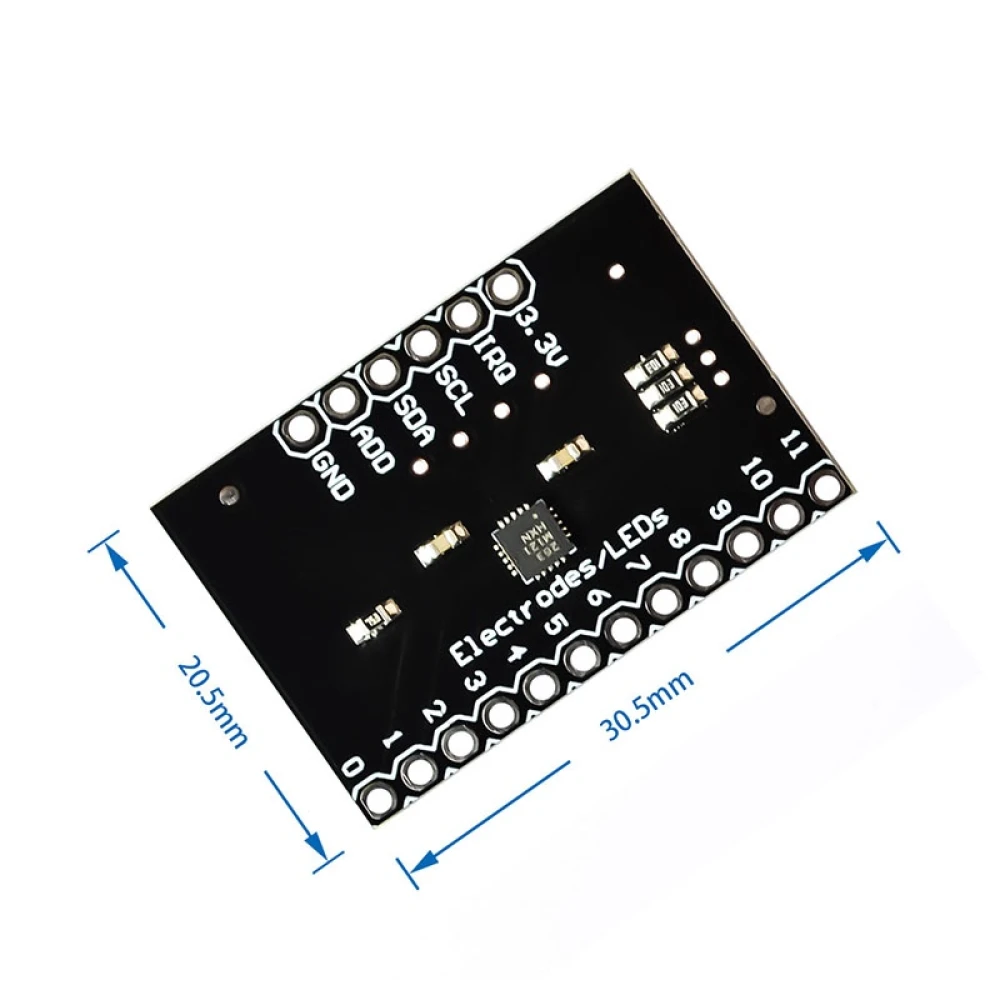
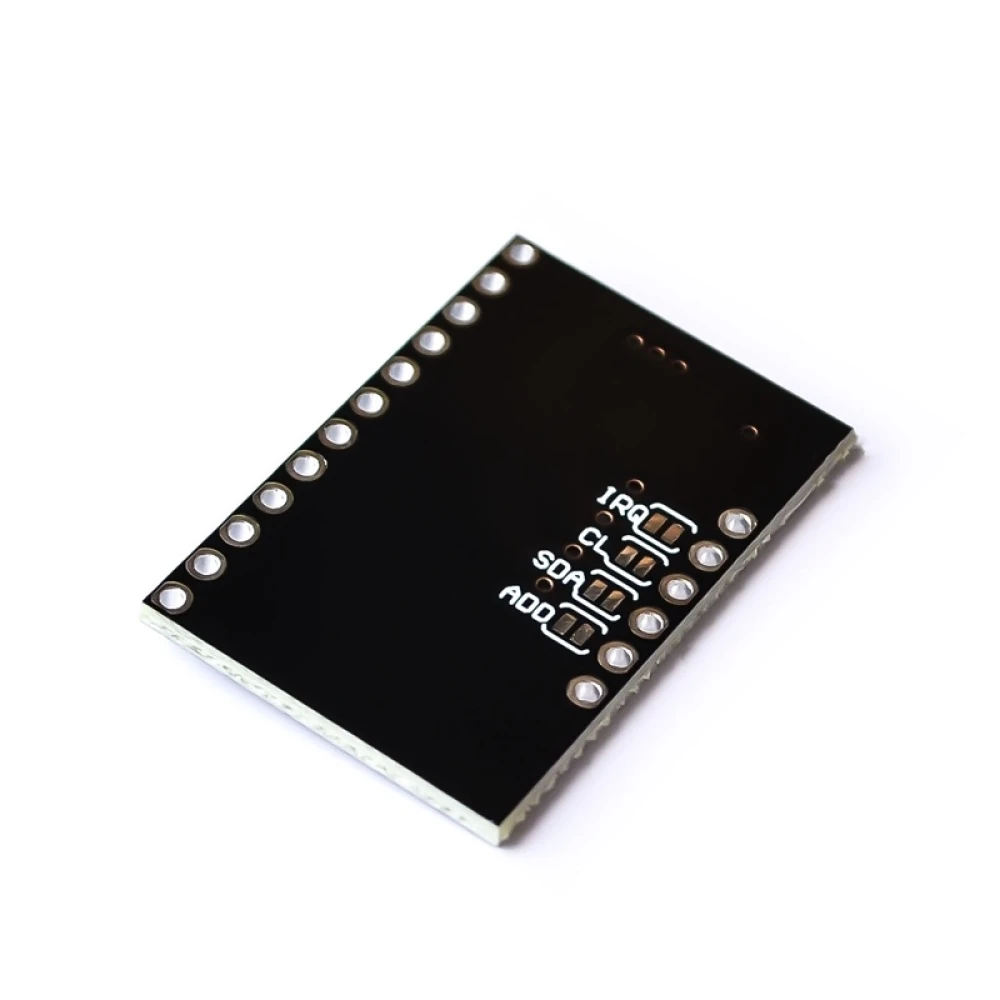
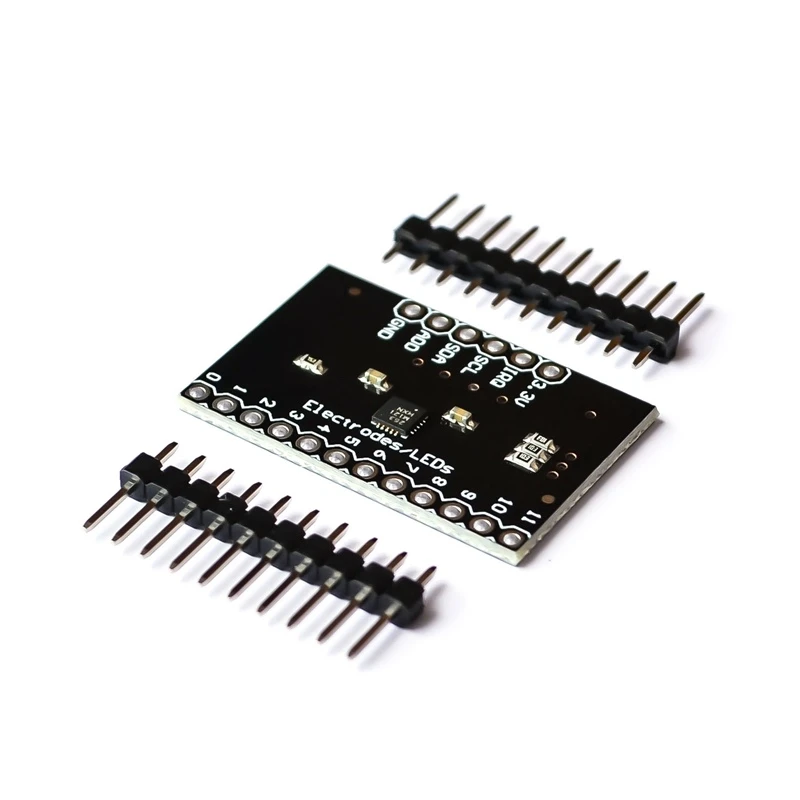
MPR121 Breakout V12 modulo sensore touch capacitivo per Arduino con I2C
Marchio: satkit
2,56€
IVA inclusa (IVA escl.: 2,10€)
Scorte limitate
Consegna standard
Mer, Apr 22 - Ven, Apr 24
Consegna espressa
Lun, Apr 20 - Mar, Apr 21
Resi entro 30 giorni
Resi gratuiti entro 30 giorni
Transazione sicura






Share:
Consegna gratuita
Per ordini superiori a 300€
Resi facili
Politica di reso di 30 giorni
Pagamento sicuro
Checkout 100% sicuro
Garanzia di qualità
Solo prodotti originali
Descrizione generale:
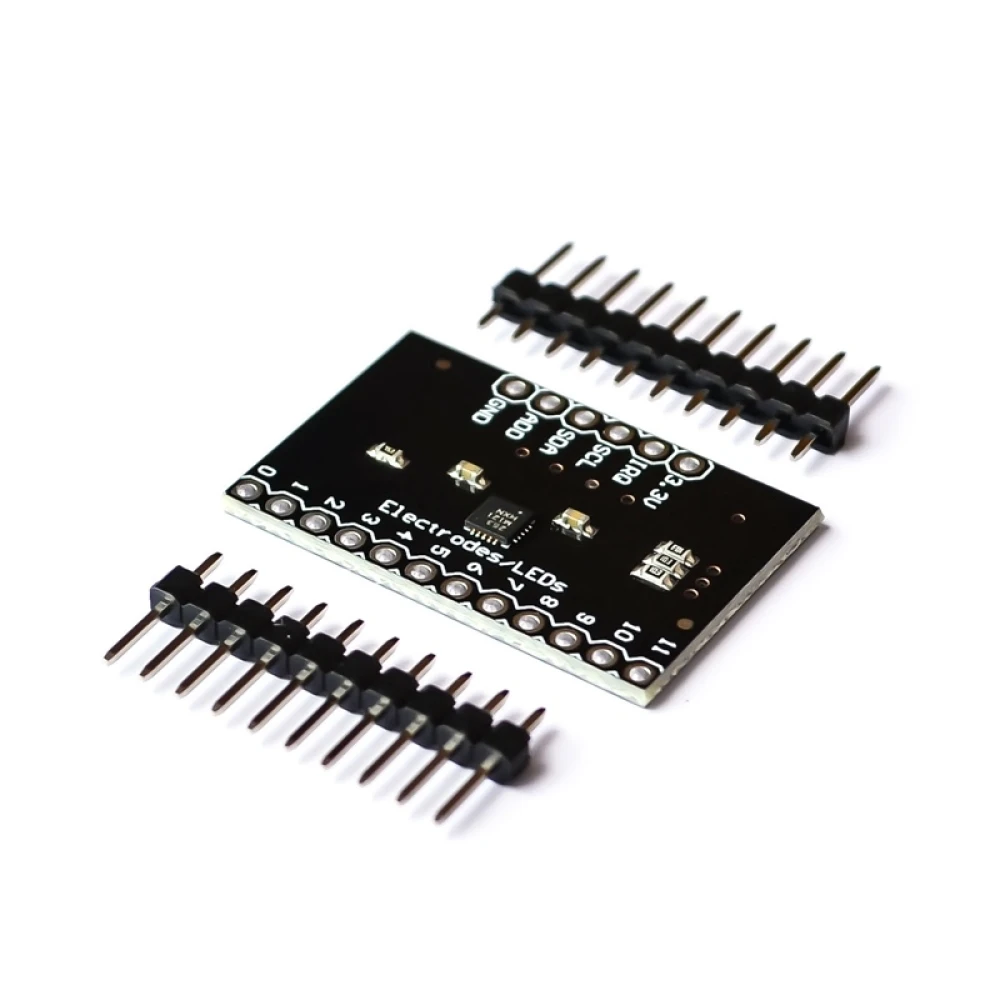
Il MPR121 Breakout V12 è un modulo progettato per controllare sensori touch capacitivi tramite un'interfaccia I2C, particolarmente compatibile con piattaforme Arduino. Questo modulo consente il rilevamento touch di fino a dodici elettrodi singoli e un tredicesimo elettrodo simulato, offrendo una soluzione versatile per progetti di interazione touch.
Caratteristiche chiave e specifiche:
- Controller per sensore touch capacitivo con interfaccia I2C.
- Capacità di controllare fino a 12 elettrodi singoli e un elettrodo simulato aggiuntivo.
- Include 8 pin di pilotaggio LED che possono essere utilizzati per controllare i LED quando non sono configurati come elettrodi.
- Quattro ponticelli nella parte inferiore della scheda per la configurazione dell'indirizzo I2C (indirizzo predefinito 0x5A) e resistenze pull-up da 10k su SDA, SCL e pin di interrupt.
- Tensione di funzionamento tra 2.5 e 3.6 VDC; non dispone di regolazione sulla scheda.
- Il pin VREG è collegato a massa tramite un condensatore da 0.1uF, limitando la modalità a bassa tensione senza modifiche.
Usi tipici:
- Implementazione in progetti Arduino che richiedono un rilevamento touch preciso e sensibile.
- Creazione di tastiere touch capacitivi personalizzate.
- Controllo di dispositivi tramite gesti touch o ingressi capacitivi.
- Integrazione in sistemi interattivi e di automazione che necessitano di ingressi touch senza contatto meccanico.
Compatibilità:
Questo modulo è compatibile con schede Arduino che supportano la comunicazione I2C e tensioni di funzionamento tra 2.5 e 3.6 VDC. È importante verificare che alimentazione e collegamenti siano configurati correttamente per evitare danni al dispositivo.
- Controlla fino a 12 elettrodi touch singoli e un elettrodo simulato.
- Interfaccia I2C per una comunicazione efficiente con Arduino.
- Otto pin per il pilotaggio dei LED, configurabili in base alle esigenze.
- Quattro ponticelli per regolare indirizzo I2C e resistenze pull-up.
- Tensione operativa tra 2.5 e 3.6 VDC, senza regolazione integrata.
- Ideale per progetti di rilevamento touch e tastiere capacitivi.
Domande e risposte dei clienti
Quins són els materials, dimensions i pes del MPR121 Breakout V12 i què porta la caixa?
La placa està fabricada en PCB estàndard FR4 amb components SMD. Les seves dimensions aproximades són 29 mm x 21 mm x 2 mm i el pes és inferior a 5 g. El paquet normalment inclou només la PCB pre-soldada; connectors i cables no solen estar inclosos.
Quines limitacions té en ambients amb alta humitat o interferències electromagnètiques?
El rendiment del MPR121 es pot veure afectat en ambients humits o amb fort soroll electromagnètic, ja que la capacitat ambiental pot alterar la sensibilitat i provocar falsos positius o errors en la detecció. Es recomana un disseny adequat del PCB i aïllament físic per millorar-ne la fiabilitat en aquests contextos.
Quin és el procediment recomanat per solucionar fallades freqüents de comunicació I2C amb aquest sensor?
Verifica que els pins SDA i SCL tinguin les resistències pull-up de 10 kΩ activades o connecta’n d’externes si cal. Assegura’t que l’adreça I2C (per defecte 0x5A) no entri en conflicte amb altres dispositius i que la tensió d’operació sigui de 3.3 V. Si el problema persisteix, revisa la integritat de les pistes i connecta a terra correctament els elèctrodes no utilitzats.
What are the materials, dimensions and weight of the MPR121 Breakout V12, and what does the box include?
The board is made from standard FR4 PCB with SMD components. Its approximate dimensions are 29 mm x 21 mm x 2 mm and its weight is under 5 g. The package normally includes only the pre-soldered PCB; connectors and cables are usually not included.
What limitations does it have in environments with high humidity or electromagnetic interference?
The MPR121’s performance may be affected in humid environments or where there is strong electromagnetic noise, as ambient capacitance can alter sensitivity and cause false positives or detection errors. Proper PCB design and physical isolation are recommended to improve reliability in these contexts.
What is the recommended procedure for resolving common I2C communication failures with this sensor?
Check that the SDA and SCL pins have 10 kΩ pull-up resistors enabled, or connect external ones if necessary. Make sure the I2C address (0x5A by default) does not conflict with other devices and that the operating voltage is 3.3 V. If the problem persists, check track integrity and properly ground any unused electrodes.
What are the materials, dimensions and weight of the MPR121 Breakout V12 and what comes in the box?
The board is made from standard FR4 PCB with SMD components. Its approximate dimensions are 29 mm x 21 mm x 2 mm and the weight is under 5 g. The package normally includes only the pre-soldered PCB; connectors and cables are usually not included.
What limitations does it have in environments with high humidity or electromagnetic interference?
The MPR121’s performance may be affected in humid environments or where there is strong electromagnetic noise, as environmental capacitance can alter sensitivity and cause false positives or detection errors. Proper PCB design and physical isolation are recommended to improve reliability in these contexts.
What is the recommended procedure for resolving common I2C communication failures with this sensor?
Check that the SDA and SCL pins have 10 kΩ pull-up resistors enabled, or connect external ones if necessary. Make sure the I2C address (0x5A by default) does not conflict with other devices and that the operating voltage is 3.3 V. If the problem persists, check track integrity and properly ground any unused electrodes.
Vilka material, mått och vikt har MPR121 Breakout V12, och vad följer med i lådan?
Kortet är tillverkat av standard FR4-PCB med SMD-komponenter. De ungefärliga måtten är 29 mm x 21 mm x 2 mm och vikten är under 5 g. Paketet innehåller normalt endast det förlödade PCB:t; kontakter och kablar ingår vanligtvis inte.
Scrivi una recensione cliente
I clienti che hanno acquistato questo articolo hanno acquistato anche
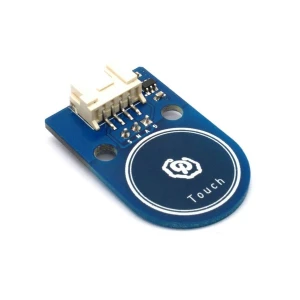
Pulsante touch Arduino plug and play compatibile con interfacce Grove e kit M4
2,68€
Ne restano solo 4 in magazzino
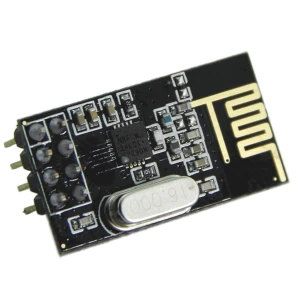
Modulo wireless NRF24L01+ per Arduino - Comunicazione efficiente
1,95€
Ne restano solo 10 in magazzino
Articoli visualizzati di recente
 MPR121 Breakout V12 modulo sensore touch capacitivo per Arduino con I2C
2,56€