


231,80€
Disponibile
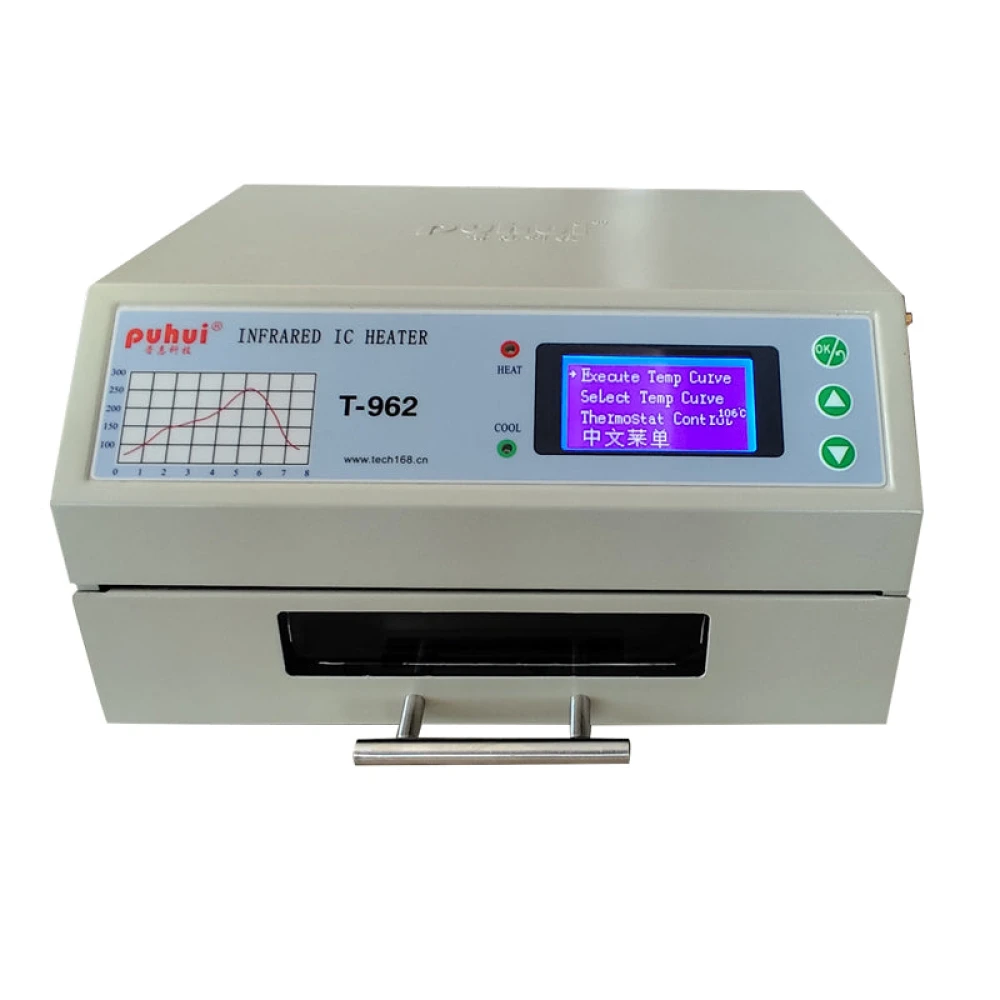
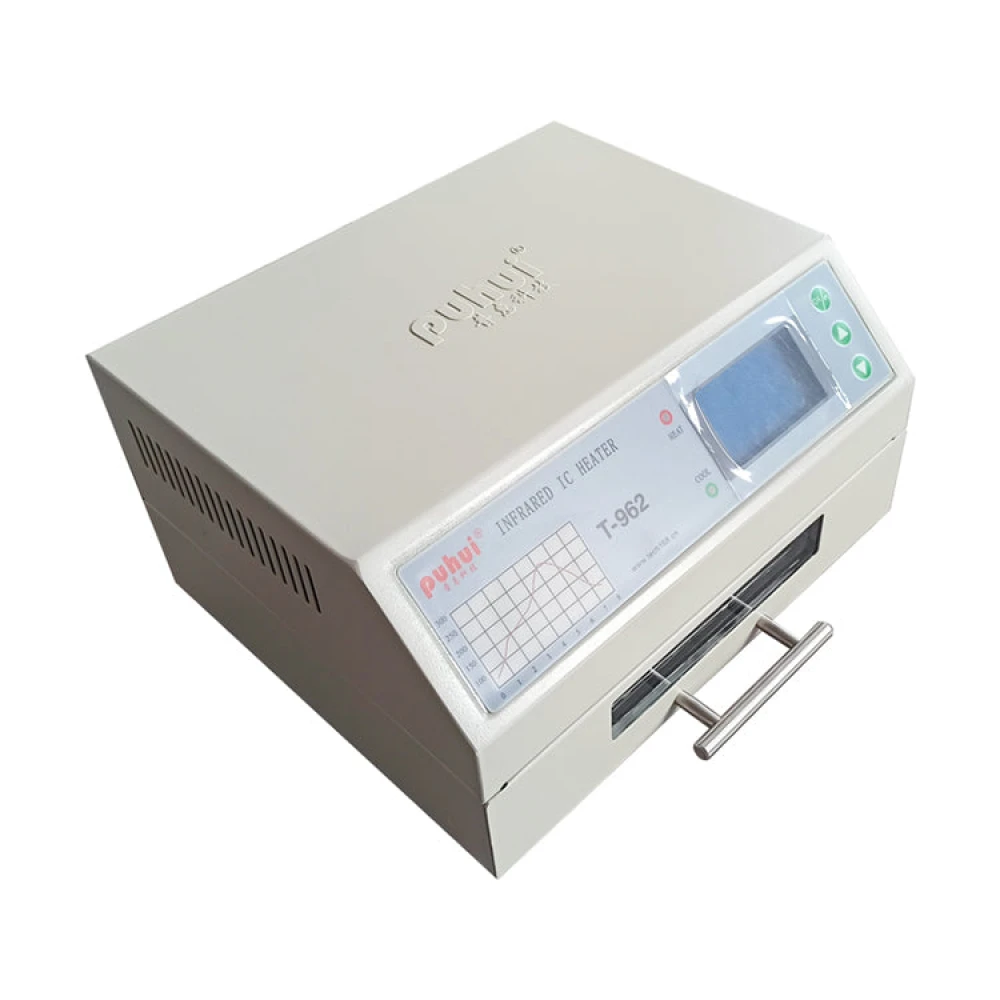
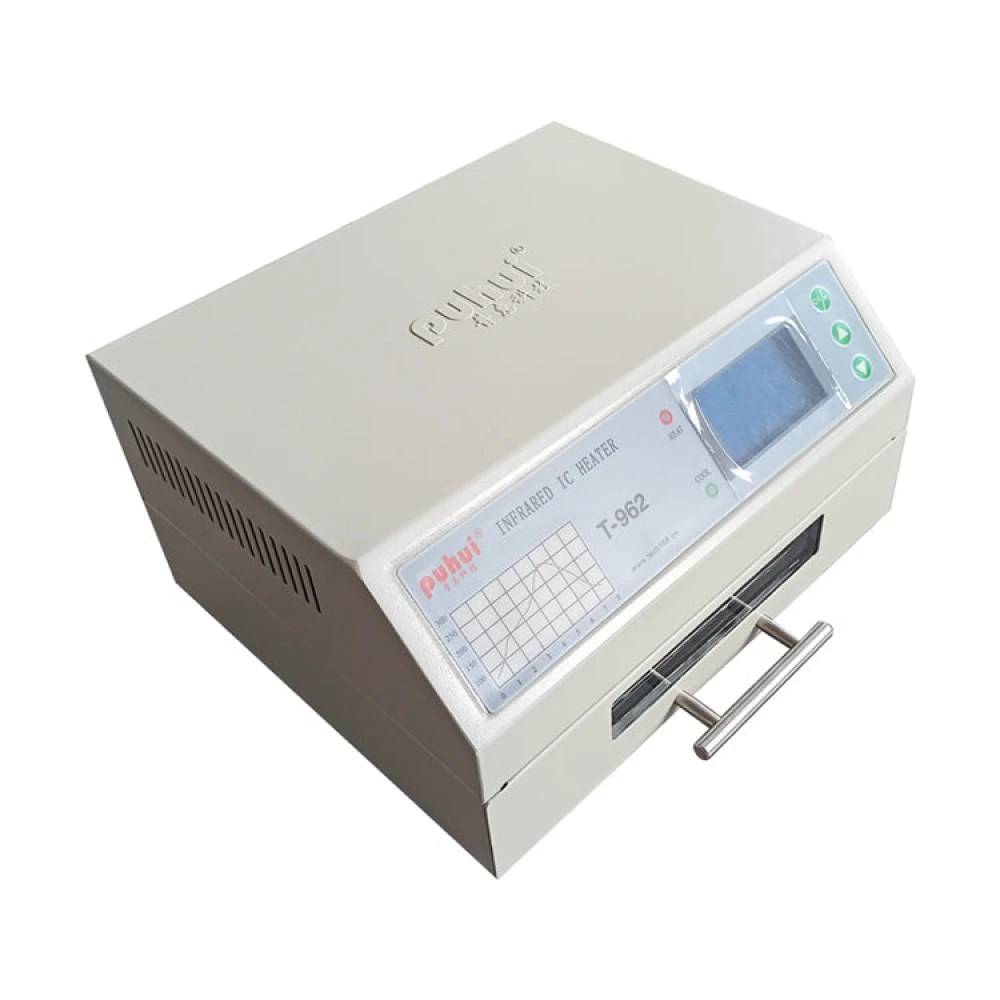
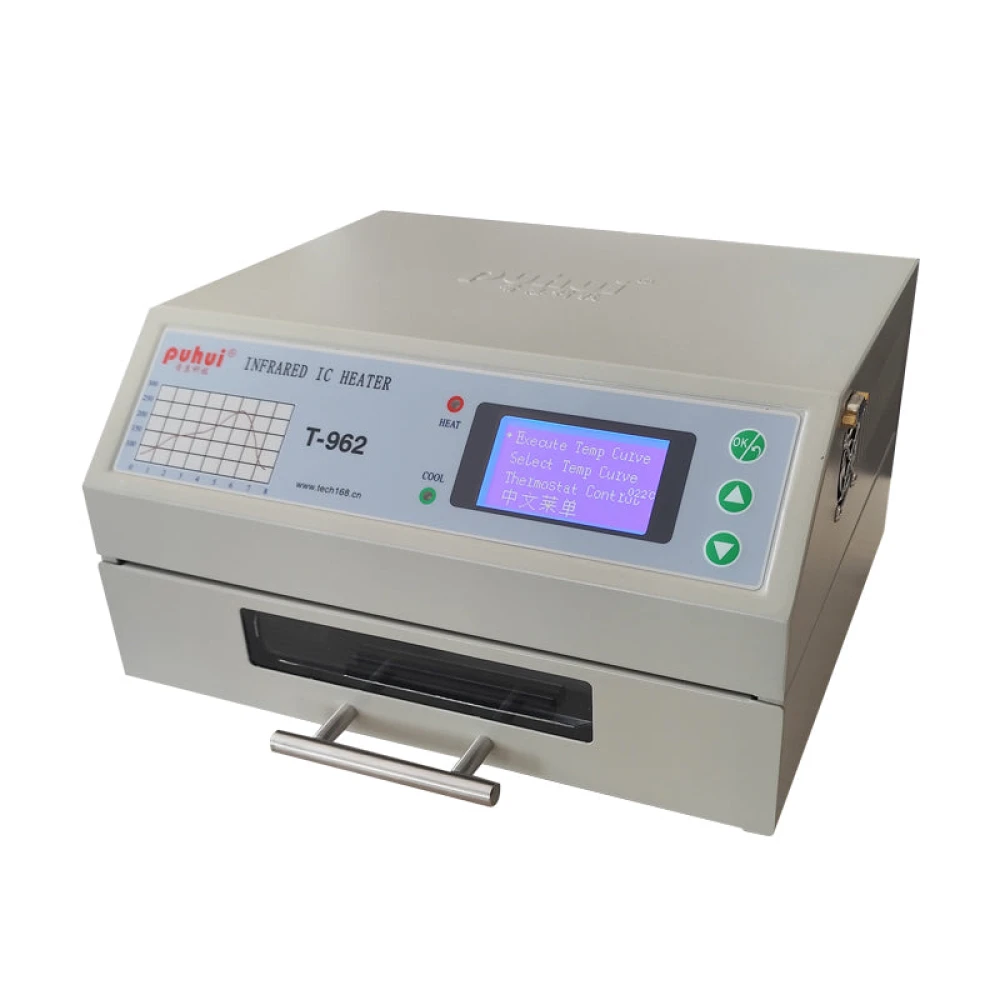
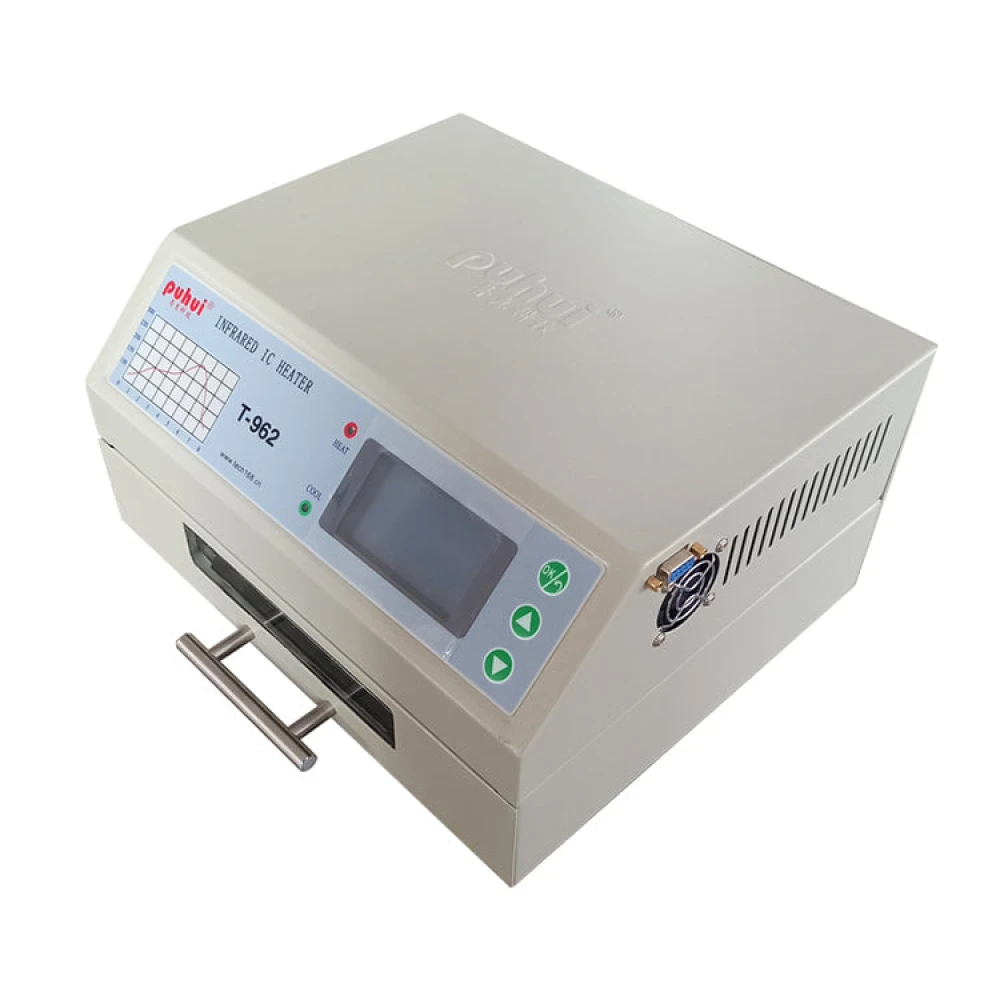
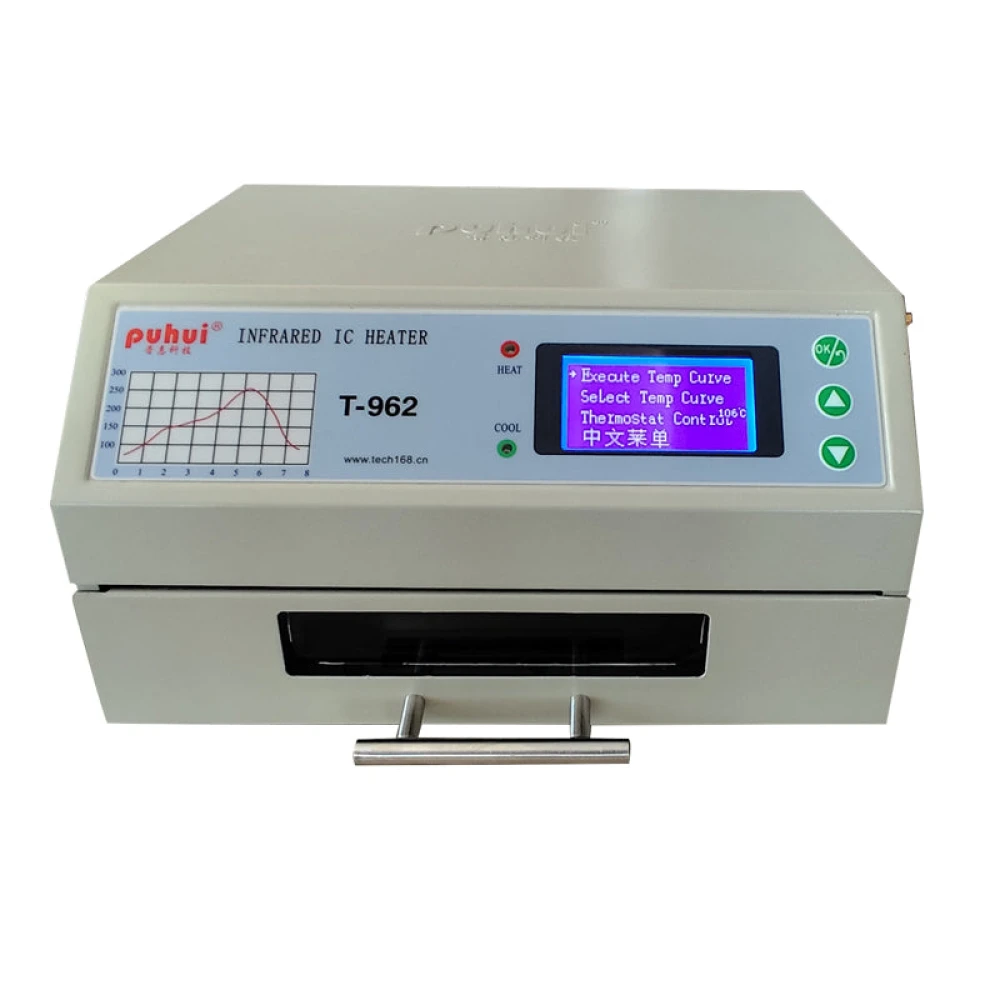
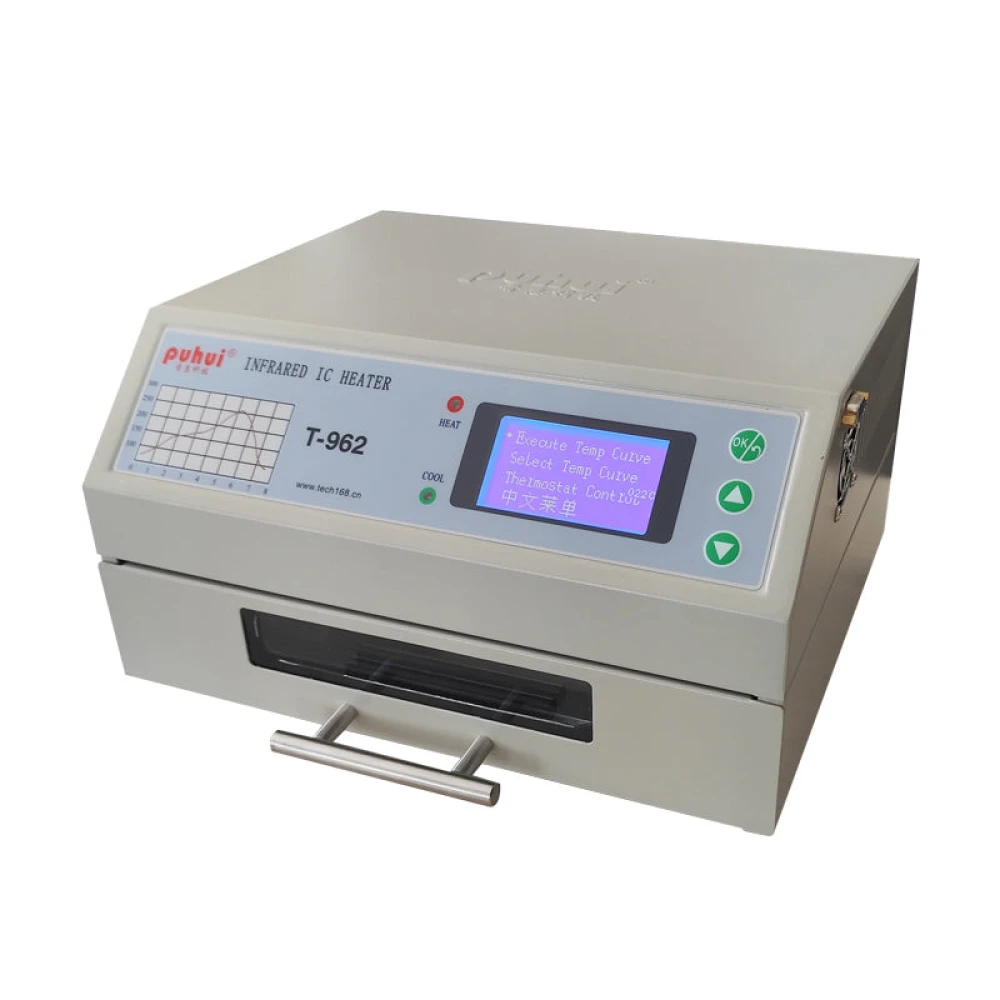
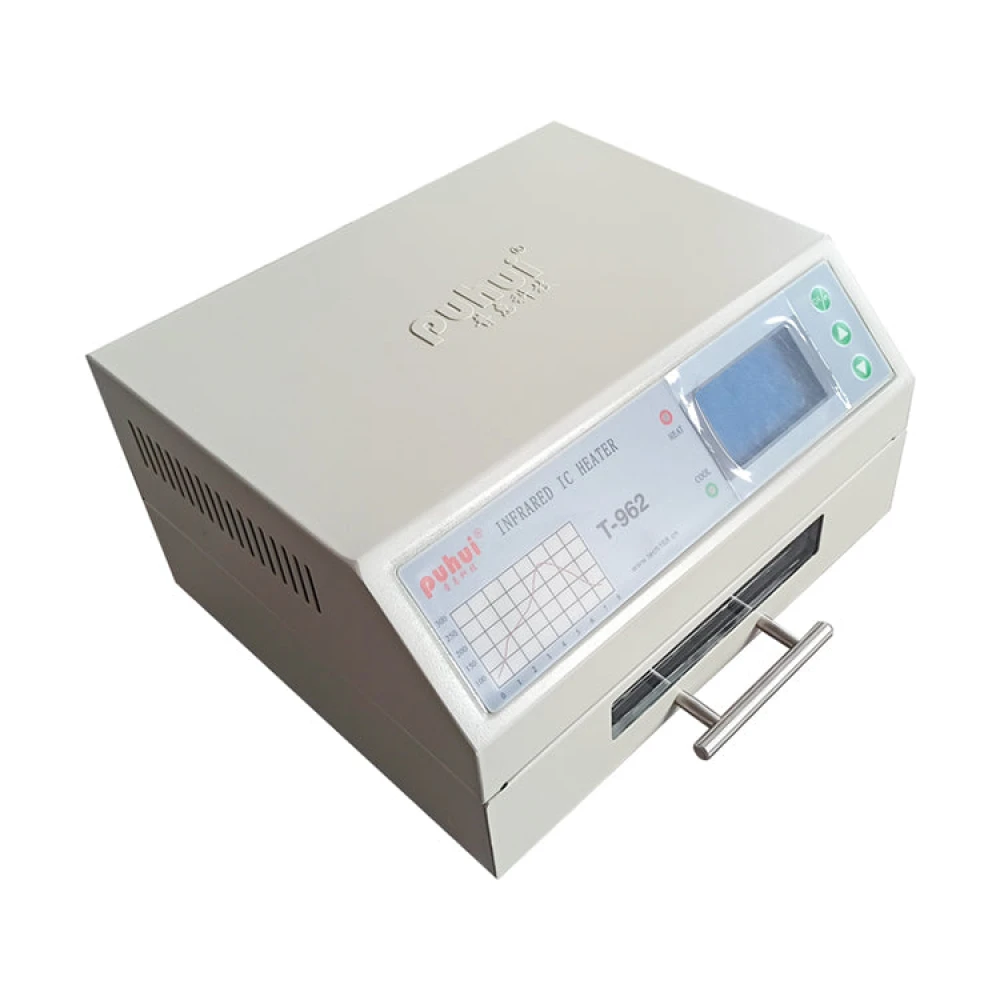
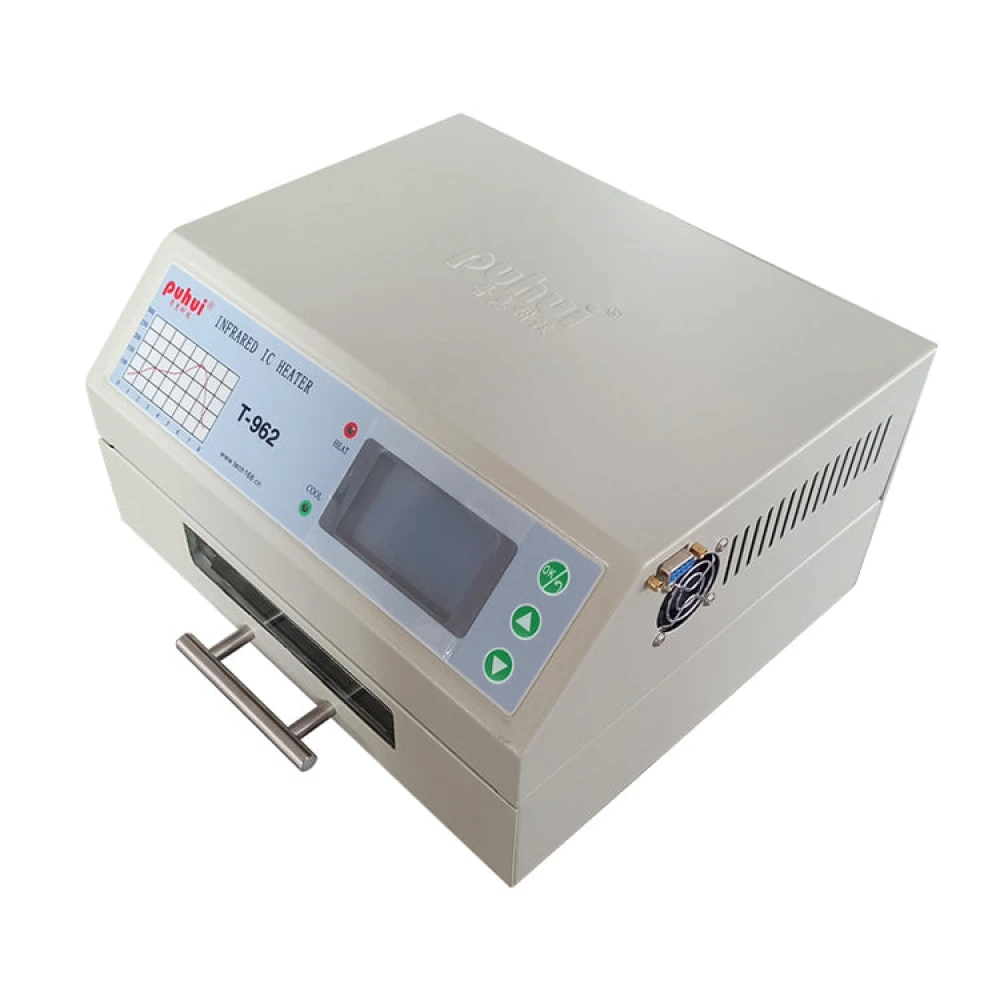
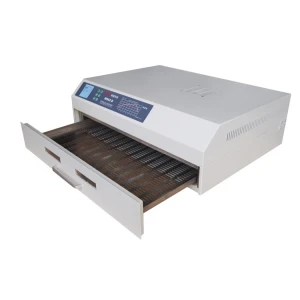
Puhui T-962 V2.0 forno a rifusione a infrarossi per PCB e componenti SMD BGA
Marchio: Puhui
231,80€
IVA inclusa (IVA escl.: 190,00€)
Scorte limitate
Consegna standard
Mer, Apr 22 - Ven, Apr 24
Consegna espressa
Lun, Apr 20 - Mar, Apr 21
Resi entro 30 giorni
Resi gratuiti entro 30 giorni
Transazione sicura






Share:
Consegna gratuita
Per ordini superiori a 300€
Resi facili
Politica di reso di 30 giorni
Pagamento sicuro
Checkout 100% sicuro
Garanzia di qualità
Solo prodotti originali
Descrizione del prodotto
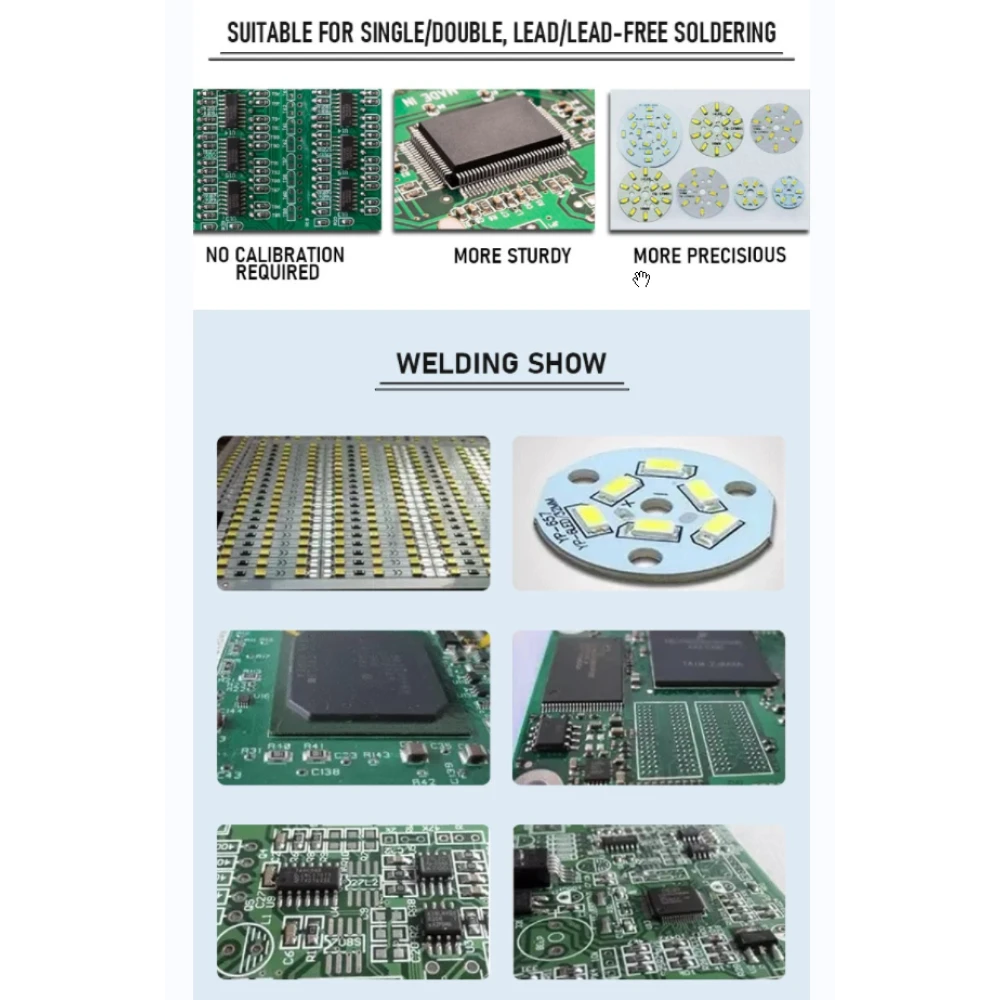
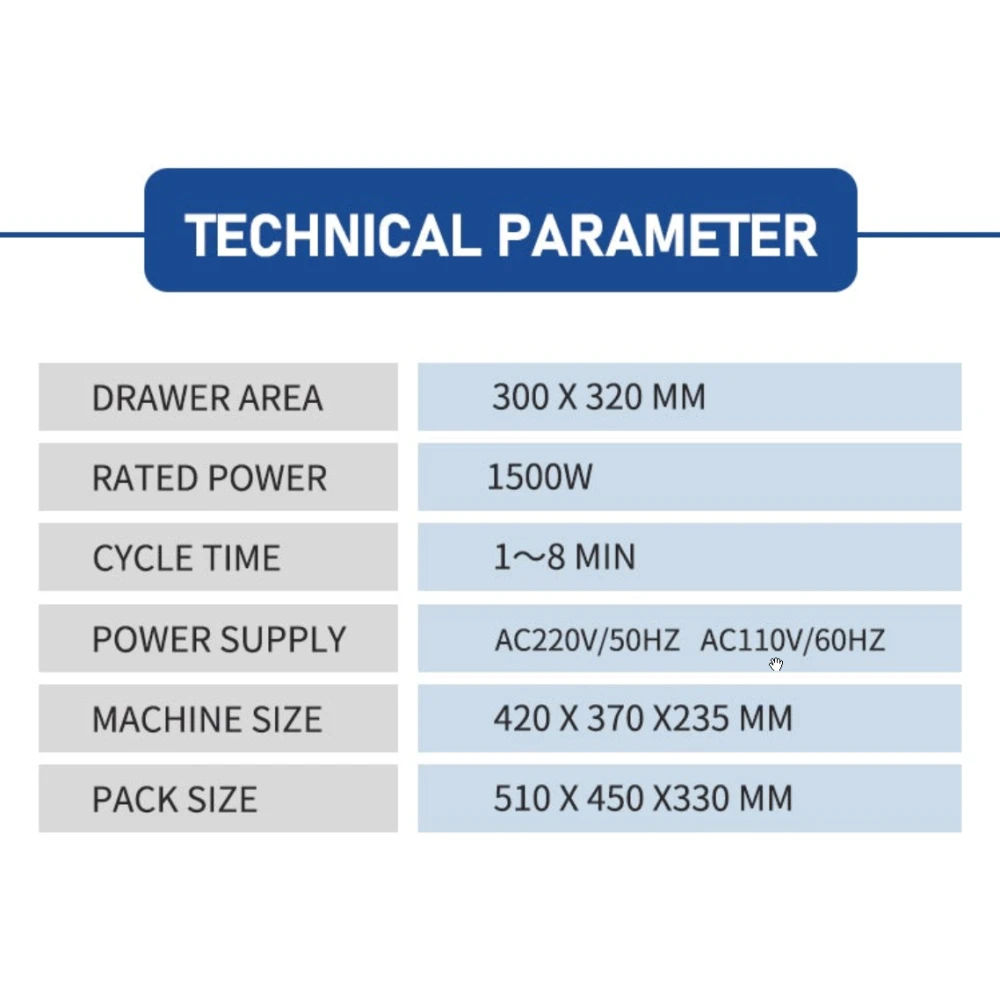
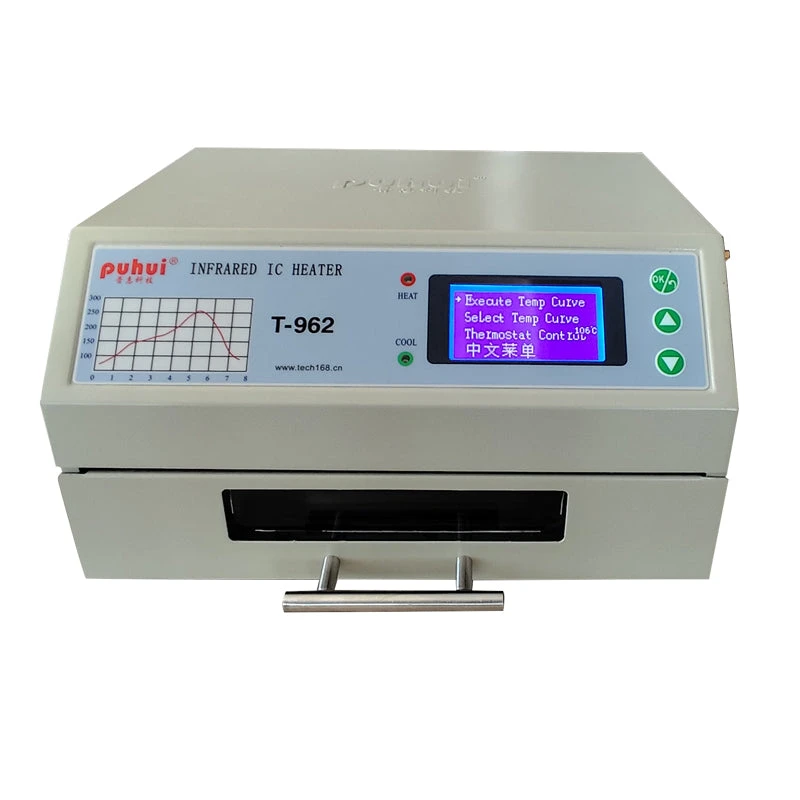
Il forno a rifusione a infrarossi Puhui T-962 V2.0 è uno strumento avanzato progettato per la saldatura precisa e affidabile di schede a circuito stampato (PCB) e componenti a montaggio superficiale (SMD), inclusi BGA, QFP e PLCC. La sua area di lavoro di 180x230 mm lo rende ideale per progetti di piccole e medie dimensioni, rappresentando un'ottima scelta per riparazioni elettroniche, produzione di prototipi e contesti آموزشی?
- Area di lavoro compatta di 180x230 mm per PCB piccole e medie
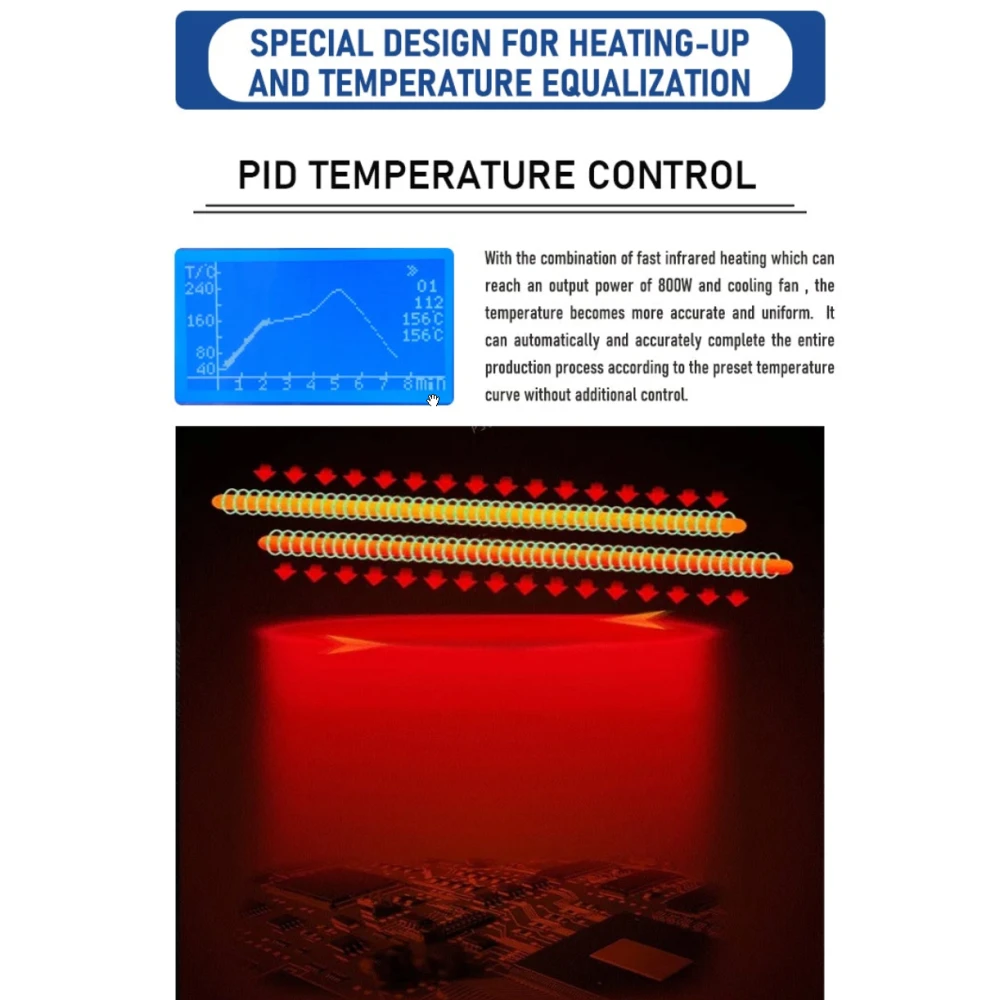
- Controllo microprocessore PID per saldature precise e ripetibili
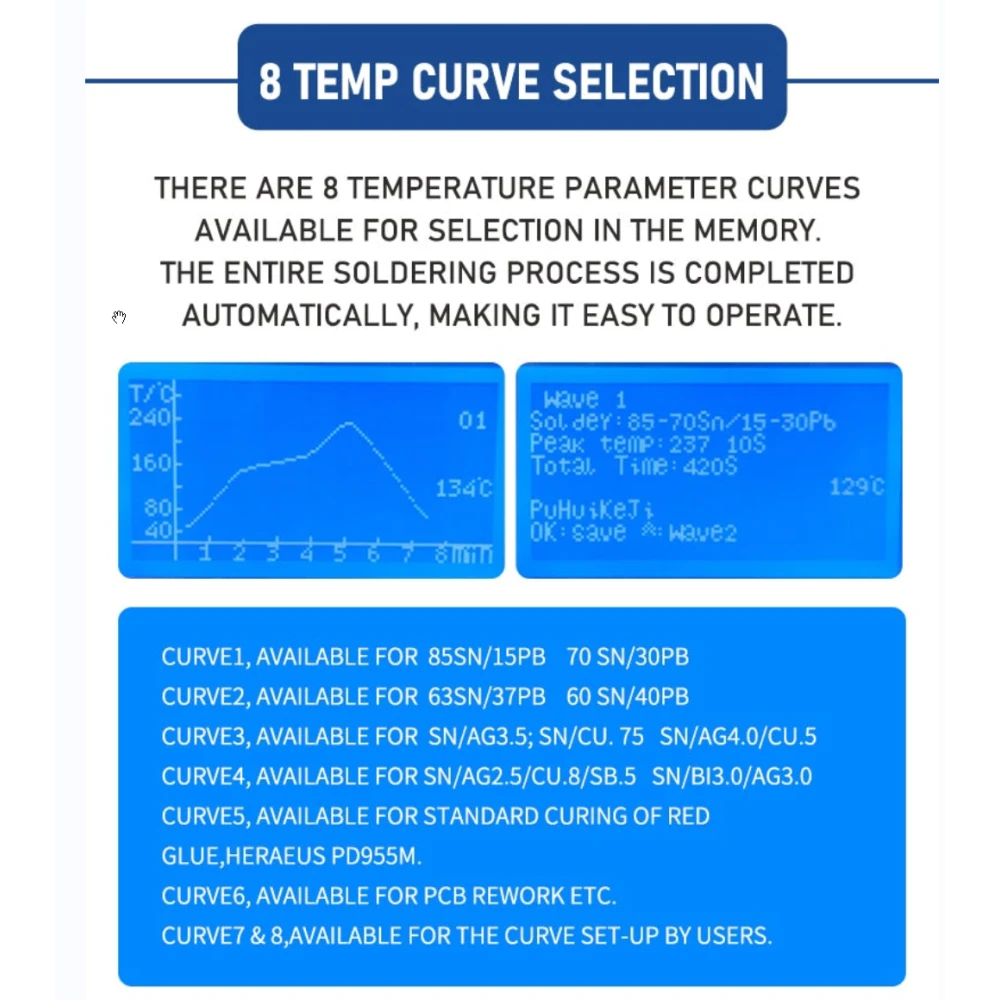
- 8 profili di temperatura preprogrammati per SMD, BGA, QFP e PLCC
- Display LCD retroilluminato con visualizzazione della curva di temperatura in tempo reale
- Camera a cassetto con riscaldamento a infrarossi e circolazione d'aria
- Connettività USB per controllo e personalizzazione tramite software Windows
- Certificazione CE, scocca metallica e protezione contro il surriscaldamento
- Configurazione plug-and-play con ciclo automatico, senza necessità di formazione speciale
Domande e risposte dei clienti
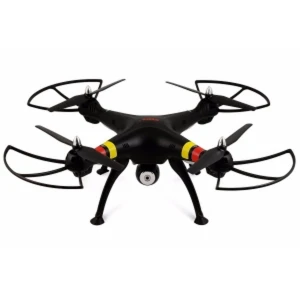
Quines són les dimensions i el pes de l’helicòpter, i què inclou exactament la caixa?
L’helicòpter fa 19 x 4,2 x 9,8 cm (llarg x ample x alt). El pes típic per a un model d’aquestes dimensions ronda els 60-80 g, tot i que el valor exacte pot variar lleugerament. A la caixa s’hi inclou l’helicòpter, el transmissor/infraroig, el cable de càrrega USB i el manual; cal verificar si s’inclouen recanvis d’hèlix segons el lot.
Quins materials componen el fuselatge i com afecten la seva resistència a caigudes o cops?
El fuselatge està elaborat majoritàriament en aliatge d’alumini de baixa densitat, cosa que ofereix una bona relació entre resistència estructural i pes reduït. Aquest material aporta més durabilitat davant impactes lleus en interiors, tot i que cops severs o caigudes des de més alçada poden danyar peces de plàstic o hèlixs.
Quins problemes de funcionament són més freqüents i com es poden prevenir o corregir?
Els problemes comuns són la desestabilització per cops (es corregeix realineant el giroscopi), la pèrdua de potència (causada per bateria esgotada; es resol carregant-la completament) i les fallades de connexió (cal assegurar connectors nets i l’aplicació actualitzada). Revisar les hèlixs per danys després d’impactes i evitar fer servir l’helicòpter quan la bateria està gairebé esgotada ajuda a prevenir avaries més greus.
Quines són les funcions clau i els principals avantatges de la font KPS3030DA davant d’una font tradicional no regulable?
La KPS3030DA ofereix regulació precisa i contínua tant de voltatge (0-30 V) com de corrent (0-30 A), cosa que la diferencia de les fonts no regulables que només ofereixen valors fixos. A més, disposa d’una pantalla LED digital que facilita el monitoratge en temps real i de mètodes de protecció avançats (contra sobrecàrrega, sobreescalfament i curtcircuit), cosa que millora la seguretat i la versatilitat per a laboratoris, producció i ensenyament.
What is the operating temperature range and thermal control accuracy of the oven?
The oven typically operates in a range from 100°C to 350°C, with a maximum deviation of ±5°C according to the manufacturer's specifications. Microprocessor thermal control allows predefined temperature profiles to be run for lead-free and leaded solder paste, although there may be small deviations under maximum load or with high ambient airflow.
What are the electrical requirements and connector type needed for this reflow oven?
The Puhui T-962 V2.0 requires 220 V AC mains supply ±10% (50 Hz), with a maximum consumption of 800 W during the heating cycle. The unit uses a standard European Schuko mains connector. For other voltages or plugs, an adapter/conversion in line with local regulations is required.
What common problems can arise during operation and how can they be resolved?
Among the most reported issues are inconsistent temperatures due to poor insulation, odour from solder paste fumes, and internal fan failures. It is recommended to check the thermal sensor regularly, clean residues, improve room ventilation and, in the event of a fault, contact the distributor for spare parts. Checking for cold or incomplete solder joints may require adjustments to the thermal profile.
What periodic maintenance is recommended to extend the oven's service life?
It is advisable to clean the oven internally after each use to remove flux residue and prevent the build-up of corrosive vapours; check the condition of the fan and cables; and verify thermal adjustment every six months. Following these steps improves durability and reduces the risk of premature faults.
What is the operating temperature range and thermal control accuracy of the oven?
The oven typically operates in a range from 100°C to 350°C, with a maximum deviation of ±5°C according to the manufacturer's specifications. Microprocessor thermal control allows predefined temperature profiles to be run for lead-free and leaded solder paste, although small deviations may occur under maximum load conditions or with high ambient airflow.
What electrical requirements and connector type does this reflow oven need?
The Puhui T-962 V2.0 requires 220 V AC mains power ±10% (50 Hz), with a maximum consumption of 800 W during the heating cycle. The unit uses a standard European Schuko mains connector. For other voltages or plugs, an adapter/conversion in line with local regulations is required.
Scrivi una recensione cliente
I clienti che hanno acquistato questo articolo hanno acquistato anche
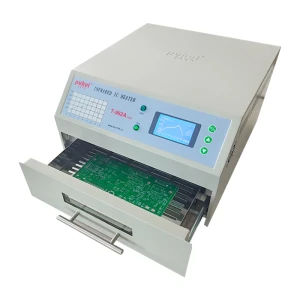
Forno reflow a infrarossi T-962A Puhui V2.0 per saldatura SMD e BGA
392,84€
Ne restano solo 4 in magazzino
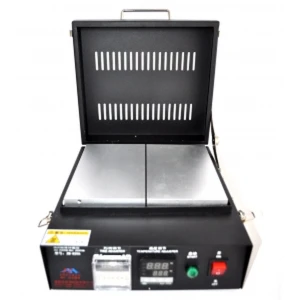
Zhuomao ZM-R255 Piastra Reballing Chip BGA con Controllo Preciso della Temperatura
242,78€
Non disponibile
Articoli visualizzati di recente
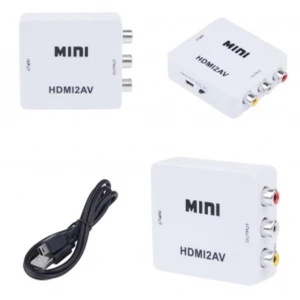
Adattatore HDMI a RCA - Convertitore segnale HDMI a AV NTSC/PAL Satkit
12,20€
Ne restano solo 7 in magazzino

J-Link V9 emulatore JTAG ARM compatibile con ARM7, ARM9, ARM11 e Cortex-STM3
24,28€
Ne restano solo 4 in magazzino
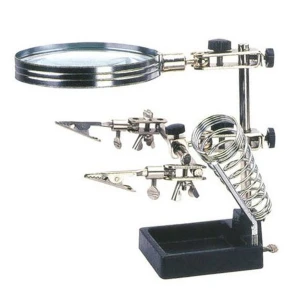
Supporto con lente d'ingrandimento per saldatura elettronica con mani libere
9,76€
Ne restano solo 4 in magazzino
 Puhui T-962 V2.0 forno a rifusione a infrarossi per PCB e componenti SMD BGA
231,80€