


2,44€
Disponibile
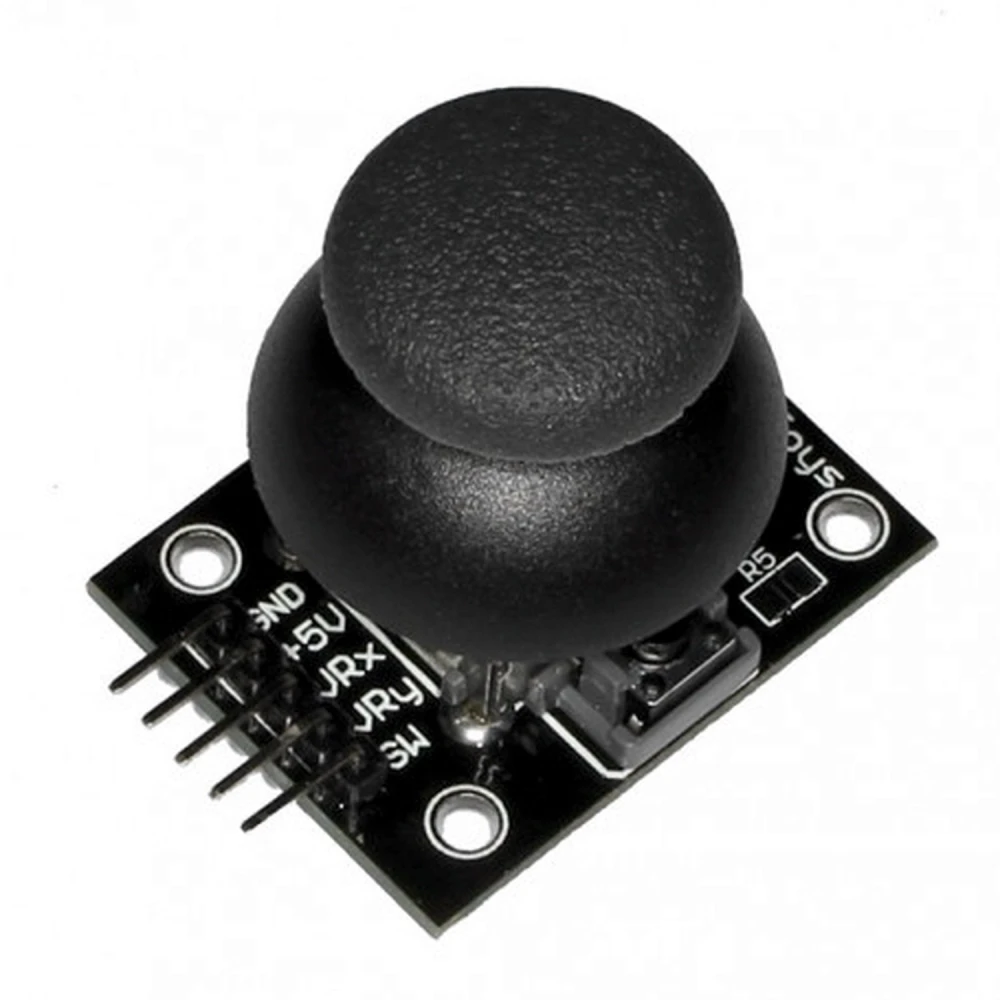
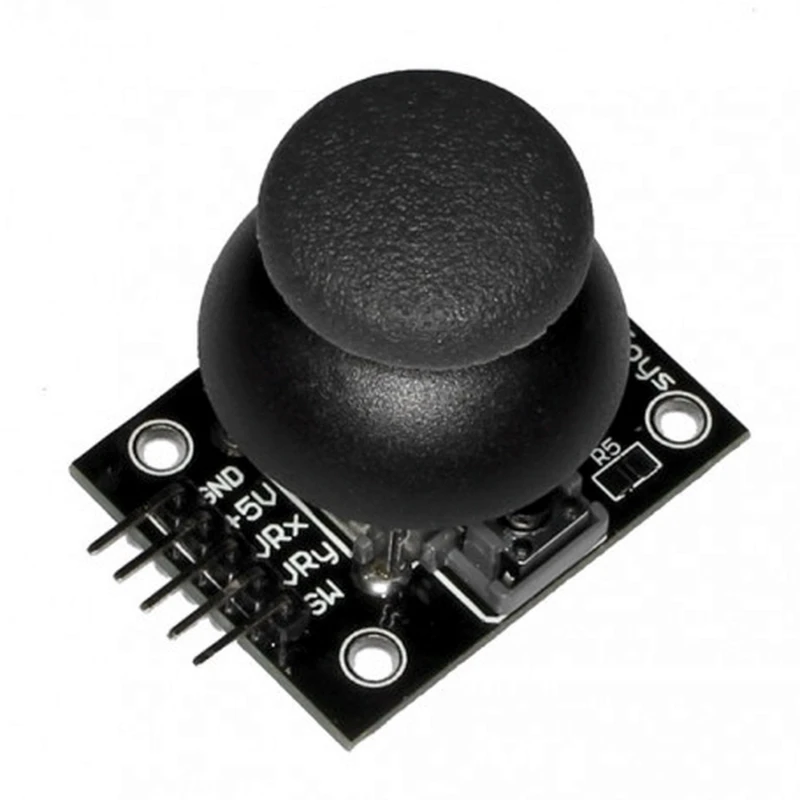
Arduino Joystick: modulo joystick 2 assi per Arduino
Marchio: satkit
2,44€
IVA inclusa (IVA escl.: 2,00€)
Scorte limitate
Consegna standard
Mer, Apr 22 - Ven, Apr 24
Consegna espressa
Lun, Apr 20 - Mar, Apr 21
Resi entro 30 giorni
Resi gratuiti entro 30 giorni
Transazione sicura






Share:
Consegna gratuita
Per ordini superiori a 300€
Resi facili
Politica di reso di 30 giorni
Pagamento sicuro
Checkout 100% sicuro
Garanzia di qualità
Solo prodotti originali
Il Arduino Joystick è un modulo compatto progettato per facilitare l'integrazione di un joystick a 2 assi con pulsante nei progetti elettronici basati su Arduino. Questo piccolo dispositivo offre un controllo analogico preciso attraverso i suoi due assi X e Y e un pulsante centrale, ideale per creare interfacce utente intuitive e controlli per giochi o applicazioni interattive.
- Due assi (X-Y): Consente la lettura analogica dei movimenti orizzontali e verticali.
- Ritorno al centro: Il joystick torna automaticamente alla posizione centrale quando non viene utilizzato, garantendo un controllo preciso.
- Pulsante centrale: Include un pulsante che può essere collegato a qualsiasi pin di ingresso/uscita digitale (IO) per funzioni aggiuntive.
- Dimensioni compatte: 4 cm di larghezza, 2.6 cm di lunghezza e 3.2 cm di altezza, ideale per progetti con spazio limitato.
- Connettori: Include pin per +5Vcc, GND, VRx (asse X), VRy (asse Y) e SW (pulsante), compatibili con la maggior parte delle schede Arduino.
Questo modulo joystick è perfetto per progetti che richiedono controllo analogico, come controller di gioco, interfacce utente, robot e sistemi di navigazione. Il facile collegamento ai pin analogici e digitali di Arduino lo rende accessibile sia ai principianti sia agli utenti avanzati.
Compatibilità: Compatibile con qualsiasi scheda Arduino che disponga di ingressi analogici e digitali, facilitandone l'integrazione in diversi progetti elettronici.
Con questo joystick per Arduino, potrai migliorare l'interattività e il controllo dei tuoi progetti, aggiungendo funzionalità e precisione in un formato compatto e facile da usare.
- Joystick a 2 assi (X-Y) con ritorno automatico al centro
- Pulsante centrale integrato per funzioni aggiuntive
- Dimensioni compatte: 4 x 2.6 x 3.2 cm
- Connettori standard: +5Vcc, GND, VRx, VRy, SW
- Compatibile con schede Arduino con pin analogici e digitali
Domande e risposte dei clienti
Quins beneficis aporta el retorn al centre en els eixos de l’Arduino Joystick davant d’altres models sense aquesta funció?
El retorn al centre garanteix que, en deixar anar la palanca, tots dos eixos (X i Y) tornin automàticament a la seva posició neutra. Això simplifica la programació i millora la precisió en aplicacions de control, ja que el valor central és predictible. Els models sense retorn requereixen més manipulació i calibratge per evitar desviacions o valors erràtics.
Quines són les dimensions i el pes de l’Arduino Joystick, i què inclou el paquet en comprar-lo?
L’Arduino Joystick fa 40 mm d’amplada, 26 mm de llargada i 32 mm d’alçada. El pes típic del mòdul és d’uns 15-20 g. El paquet normalment inclou només el mòdul joystick, sense cables ni accessoris extres.
Amb quins microcontroladors és compatible aquest mòdul joystick i quin voltatge d’alimentació requereix?
El mòdul és compatible amb la majoria de microcontroladors que disposin d’entrades analògiques i digitals estàndard (per exemple, Arduino, ESP32, STM32, Raspberry Pi Pico). Funciona amb alimentació de +5 Vcc. No és recomanable utilitzar-lo directament amb plaques que només admetin 3,3 V sense modificar el divisor de voltatge.
Requereix calibratge o ajust l’Arduino Joystick per obtenir lectures precises de X, Y i del polsador?
Sí, és recomanable calibrar els valors mínims i màxims dels eixos X i Y mitjançant programari, ja que el rang analògic pot variar lleugerament per toleràncies mecàniques i elèctriques. El polsador central generalment ofereix un senyal digital estable sense necessitat d’ajust addicional.
Quina és la durabilitat estimada del mecanisme i quines cures específiques requereix per mantenir un funcionament òptim?
El joystick té una vida útil estimada de diverses desenes de milers de cicles, segons el fabricant típic d’aquest tipus de mòduls. Per garantir un funcionament òptim, eviteu cops forts, no sotmeteu l’eix a forces laterals extremes i manteniu la superfície lliure de pols i humitat.
What benefits does the centre return on the Arduino Joystick axes provide compared with other models without this function?
The centre return ensures that when the lever is released, both axes (X and Y) automatically return to their neutral position. This simplifies programming and improves accuracy in control applications, as the centre value is predictable. Models without centre return require additional handling and calibration to avoid drift or erratic values.
What are the dimensions and weight of the Arduino Joystick, and what is included in the package when purchased?
The Arduino Joystick measures 40 mm wide, 26 mm long and 32 mm high. The typical weight of the module is around 15–20 g. The package usually includes only the joystick module, with no cables or extra accessories.
Which microcontrollers is this joystick module compatible with, and what supply voltage does it require?
The module is compatible with most microcontrollers that have standard analogue and digital inputs (for example, Arduino, ESP32, STM32, Raspberry Pi Pico). It operates on +5 V DC. It is not recommended for direct use with boards that only support 3.3 V without modifying the voltage divider.
Does the Arduino Joystick require calibration or adjustment to obtain accurate X, Y and push-button readings?
Yes, it is recommended to calibrate the minimum and maximum values of the X and Y axes in software, as the analogue range may vary slightly due to mechanical and electrical tolerances. The centre push-button generally provides a stable digital signal without any additional adjustment.
What is the estimated lifespan of the mechanism and what specific care is required to keep it working optimally?
The joystick has an estimated service life of several tens of thousands of cycles, depending on the typical manufacturer of this type of module. To ensure optimal operation, avoid strong impacts, do not subject the axis to extreme lateral forces, and keep the surface free from dust and moisture.
Scrivi una recensione cliente
I clienti che hanno acquistato questo articolo hanno acquistato anche
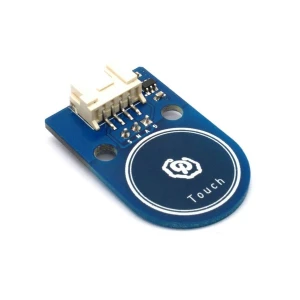
Pulsante touch Arduino plug and play compatibile con interfacce Grove e kit M4
2,68€
Ne restano solo 4 in magazzino
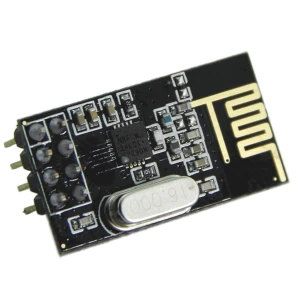
Modulo wireless NRF24L01+ per Arduino - Comunicazione efficiente
1,95€
Ne restano solo 10 in magazzino
 Arduino Joystick: modulo joystick 2 assi per Arduino
2,44€