


0,61€
Disponibile


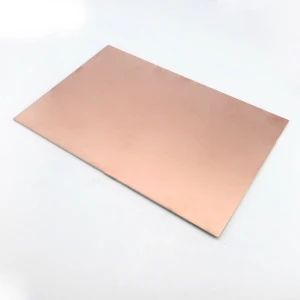
Piastra bachelite prototipi 15x9 per progetti elettronici di qualità
Marchio: satkit
0,61€
IVA inclusa (IVA escl.: 0,50€)
Disponibile - Spedizione immediata
Consegna standard
Mer, Apr 22 - Ven, Apr 24
Consegna espressa
Lun, Apr 20 - Mar, Apr 21
Resi entro 30 giorni
Resi gratuiti entro 30 giorni
Transazione sicura






Share:
Consegna gratuita
Per ordini superiori a 300€
Resi facili
Politica di reso di 30 giorni
Pagamento sicuro
Checkout 100% sicuro
Garanzia di qualità
Solo prodotti originali
La piastra bachelite prototipi 15x9 è un componente essenziale per chi sviluppa progetti elettronici e ha bisogno di una base resistente e affidabile per montare i propri circuiti. Realizzata con una lamina di plastica di bachelite, questa piastra offre durata e stabilità per prototipi e test.
Caratteristiche principali:
- Dimensioni: 9 x 15 cm, ideali per progetti medi e piccoli.
- Spessore: 1.2 mm, che garantisce rigidità e resistenza meccanica.
- Distanza tra i fori: 2,54 mm, standard per componenti elettronici e compatibile con la maggior parte dei pin e connettori.
- Diametro del foro: 1.0 mm, adatto per saldatura e montaggio dei componenti.
- Materiale: Lamina di plastica di bachelite, nota per il suo isolamento elettrico e la resistenza termica.
Usi tipici:
- Montaggio di circuiti elettronici personalizzati per sviluppo e test.
- Prototipazione rapida in progetti di elettronica DIY e formazione.
- Base per la saldatura di componenti elettronici in lavori di riparazione o realizzazione.
Compatibilità: Questa piastra è compatibile con componenti elettronici standard che utilizzano una distanza di 2,54 mm tra i pin, come resistori, condensatori, circuiti integrati e moduli Arduino.
Grazie al suo design e alle sue caratteristiche, la piastra bachelite per prototipi 15x9 è uno strumento versatile e pratico per ingegneri, tecnici e appassionati di elettronica che cercano una base solida per i propri progetti.
- Formato compatto di 9x15 cm per progetti elettronici.
- Spessore di 1.2 mm per rigidità e durata.
- Fori con diametro di 1.0 mm per un montaggio semplice dei componenti.
- Distanza standard tra i fori di 2,54 mm compatibile con componenti comuni.
- Materiale in bachelite con isolamento elettrico e resistenza termica.
Domande e risposte dei clienti
What is the main material of the board and what advantages does it offer over fibreglass (FR4) boards?
The board is made from bakelite, a phenolic plastic, which makes it light and economical. Although it is less mechanically and thermally resistant than FR4, its ease of cutting and low cost make it suitable for low- to medium-demand prototypes where extreme durability is not the main factor.
What are the exact dimensions, thickness and hole diameter of the board?
The board measures exactly 15 cm x 9 cm, with a thickness of 1.2 mm. The holes have a diameter of 1.0 mm and are spaced 2.54 mm apart (standard 0.1-inch pitch), suitable for most through-hole components.
Does the board support SMD component mounting, or is it only suitable for through-hole (THT) components?
This board is designed exclusively for THT (through-hole) component mounting. It does not have the pads, layout or dimensions suitable for soldering SMD components safely or efficiently.
What are the thermal limits and soldering recommendations to avoid damaging the bakelite?
Bakelite can degrade if exposed to temperatures above 250°C for prolonged periods; it is recommended to use soldering irons between 320°C and 370°C and limit soldering time on each pad to less than 3 seconds to avoid delamination or burning.
Are there any electrical safety standards or restrictions for using this board in high-voltage applications?
This board is not certified under international high-voltage standards (such as IEC or UL for critical applications). It is recommended only for low-voltage applications and educational or prototyping use, not for final installations connected to the mains supply.
What is the main material of the board and what advantages does it offer over fibreglass (FR4) boards?
The board is made from bakelite, a phenolic plastic, which makes it light and economical. Although it is less mechanically and thermally resistant than FR4, its ease of cutting and low cost make it suitable for low- to medium-demand prototypes where extreme durability is not the main factor.
What are the exact dimensions, thickness and hole diameter of the board?
The board measures exactly 15 cm x 9 cm, with a thickness of 1.2 mm. The holes have a diameter of 1.0 mm and are spaced 2.54 mm apart (standard 0.1 inch pitch), suitable for most through-hole components.
Does the board support SMD components, or is it only suitable for through-hole (THT) components?
This board is designed exclusively for through-hole (THT) component mounting. It does not have pads or layout dimensions suitable for soldering SMD components safely or efficiently.
What are the thermal limits and soldering recommendations to avoid damaging the bakelite?
Bakelite can degrade if exposed to temperatures above 250°C for prolonged periods; it is recommended to use soldering irons between 320°C and 370°C and limit soldering time on each pad to less than 3 seconds to avoid delamination or burning.
Are there any electrical safety standards or restrictions for using this board in high-voltage applications?
This board is not certified under international high-voltage standards (such as IEC or UL for critical applications). It is recommended only for low-voltage applications and educational or prototyping use, not for final installations connected to the mains supply.
Scrivi una recensione cliente
I clienti che hanno acquistato questo articolo hanno acquistato anche
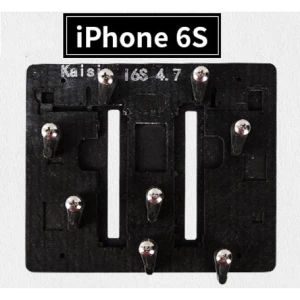
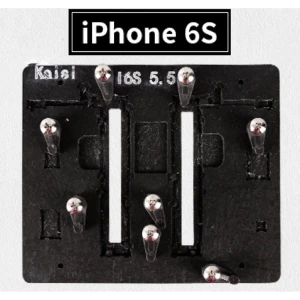
Supporto speciale resistente al calore per riparazione schede PCB iPhone 6S
14,64€
Ne restano solo 4 in magazzino
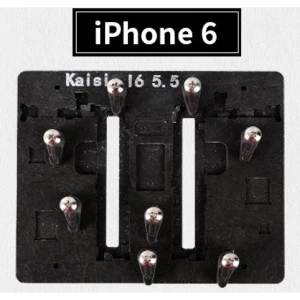
Supporto speciale per riparazione schede PCB iPhone 6plus resistente al calore
14,64€
Ne restano solo 2 in magazzino
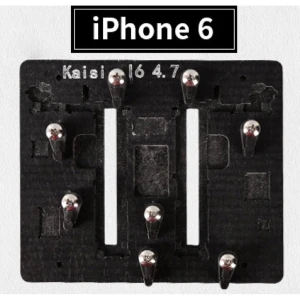
Supporto speciale per riparazione schede PCB iPhone 6 resistente al calore
14,64€
Ne restano solo 5 in magazzino
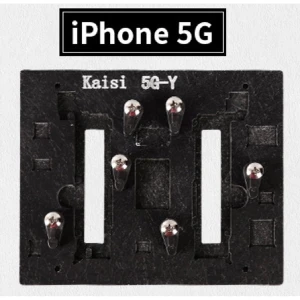
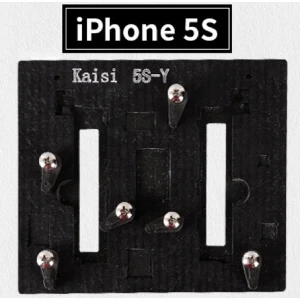
Supporto speciale per riparazione scheda PCB iPhone 5s resistente al calore
14,64€
Ne restano solo 2 in magazzino
Articoli visualizzati di recente
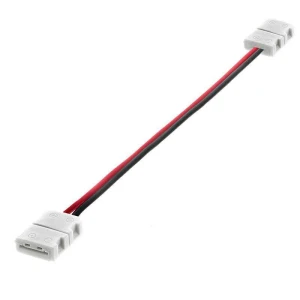
Cavo per collegare strisce LED monocolore 8mm 12v con connettore 2 Pin
0,51€
Ne restano solo 10 in magazzino
 Piastra bachelite prototipi 15x9 per progetti elettronici di qualità
0,61€