


4,88€
Disponibile
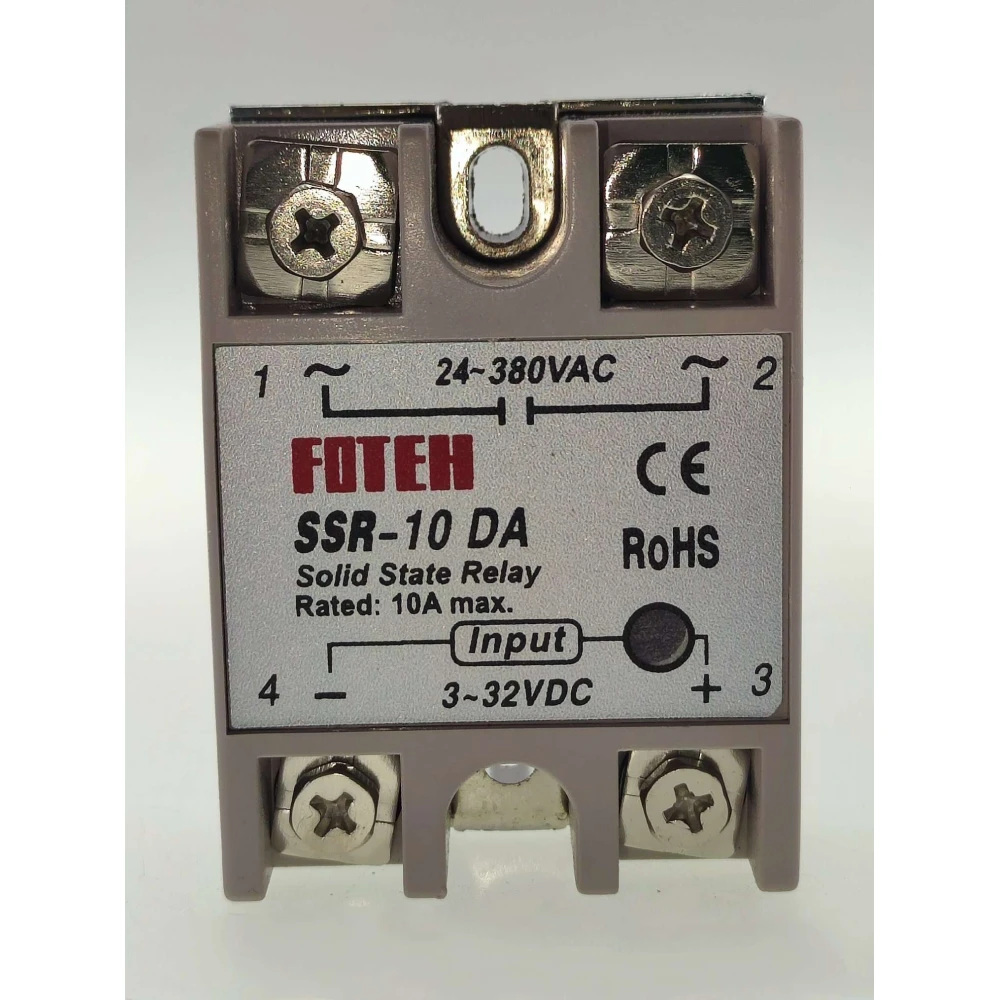
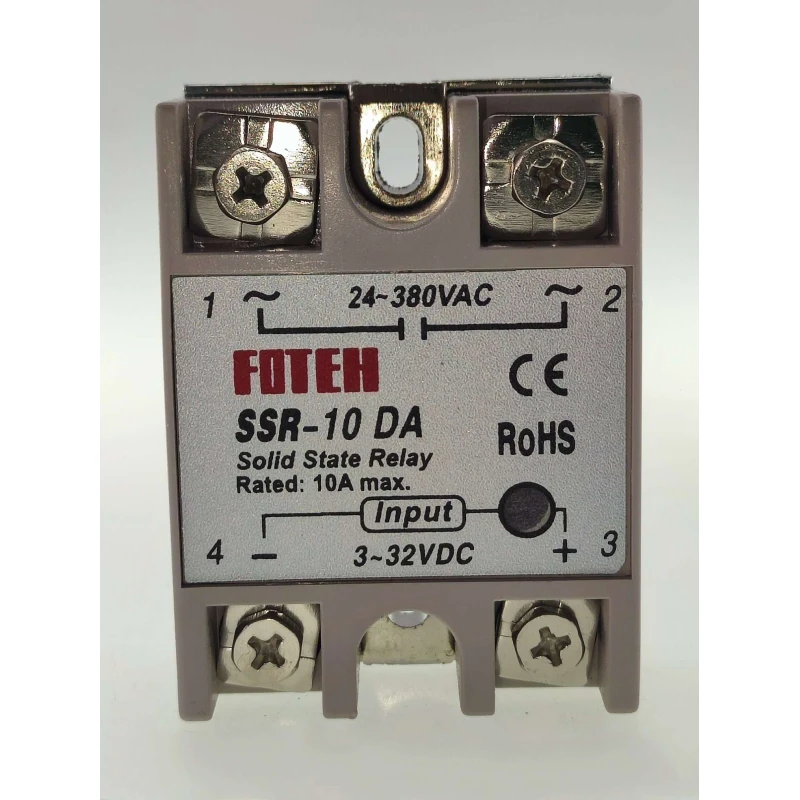
Relè a stato solido Fotek SSR-10 10A per controllo elettrico efficiente
Marchio: Fotek
4,88€
IVA inclusa (IVA escl.: 4,00€)
Scorte limitate
Consegna standard
Mer, Apr 22 - Ven, Apr 24
Consegna espressa
Lun, Apr 20 - Mar, Apr 21
Resi entro 30 giorni
Resi gratuiti entro 30 giorni
Transazione sicura






Share:
Consegna gratuita
Per ordini superiori a 300€
Resi facili
Politica di reso di 30 giorni
Pagamento sicuro
Checkout 100% sicuro
Garanzia di qualità
Solo prodotti originali
Il rele stato solido Fotek SSR-10 10A è un dispositivo elettronico che funziona come un interruttore senza contatto, progettato per controllare carichi elettrici ad alta corrente tramite un piccolo segnale di controllo. È ampiamente utilizzato in applicazioni come il controllo della temperatura in sistemi di riscaldamento elettrico, offrendo una commutazione rapida e affidabile.
Caratteristiche principali:
- Voltaje de entrada: 3-32 VDC
- Corriente de entrada: DC 3-10 mA
- Voltaje de salida: 24-380 VCA
- Corriente de salida nominal: 10A (con margen de seguridad 3/2 para evitar sobrecargas)
- Caída de voltaje en estado activo: 1.5V
- Corriente de fuga en estado apagado: 2 mA
- Tiempo de encendido y apagado: 10 ms
- Resistencia a media tensión: 1000 VAC
- Resistencia a la insolación: 1000 MΩ / 500 VDC
- Temperatura ambiente de operación: -30 a 75 °C
- Método de instalación: atornillado
- Indicador de trabajo: LED
Vantaggi del relè a stato solido Fotek SSR-10 10A:
- Lunga durata grazie all'assenza di contatti meccanici.
- Senza scintille né rumore durante la commutazione.
- Nessuna interferenza elettromagnetica, per un funzionamento stabile.
- Alta velocità di commutazione e forte capacità anti-interferenza.
- Design compatto, resistente a vibrazioni, corrosione e con prevenzione delle esplosioni.
- Compatibile con circuiti integrati TTL, DTL, HTL, tra gli altri.
Usi tipici: Questo relè è ideale per controllare apparecchi elettrici resistivi, come cavi riscaldanti e tubazioni di riscaldamento elettrico. Si consiglia di lasciare un margine di corrente di 3/2 rispetto alla corrente nominale per evitare danni e garantire una corretta dissipazione del calore, soprattutto quando il carico supera i 5A. Per carichi elevati, si consiglia l'uso di un dissipatore di calore speciale per stato solido.
Precauzioni e raccomandazioni:
- Non usare per carichi induttivi o motori, poiché è progettato per carichi resistivi.
- Prestare attenzione alla dissipazione termica per evitare surriscaldamenti.
- Installare correttamente tramite viti per garantire un buon contatto termico ed elettrico.
Questo relè a stato solido Fotek SSR-10 10A è una soluzione efficiente e affidabile per applicazioni industriali e domestiche che richiedono un controllo preciso dei carichi elettrici con alta durata e sicurezza.
- Tensione di ingresso: 3-32 VDC
- Corrente di ingresso: DC 3-10 mA
- Tensione di uscita: 24-380 VCA
- Corrente massima di uscita: 10A con margine di sicurezza
- Tempo di commutazione rapido: 10 ms
- Indicatore LED di funzionamento
- Design senza contatto per una maggiore durata
- Compatibile con circuiti TTL, DTL, HTL
- Temperatura di esercizio: -30 a 75 °C
- Installazione tramite viti per maggiore sicurezza
Domande e risposte dei clienti
Quins són els avantatges clau del relé d’estat sòlid Foteh SSR-10 10A davant d’un relé electromecànic tradicional?
El SSR-10 10A ofereix commutació sense contacte físic, cosa que implica zero desgast mecànic, absència de soroll i més resistència a la vibració i la corrosió. A més, no genera espurnes ni interferències electromagnètiques i permet una velocitat de commutació superior. El principal trade-off és que només disposa d’un grup de contactes i es pot escalfar a corrents altes, fet que requereix atenció a la dissipació tèrmica.
Quina temperatura màxima pot assolir durant el funcionament i com s’ha de gestionar la dissipació tèrmica?
El SSR es pot escalfar significativament sota càrregues properes a 10 A. Quan es fa servir per sobre de 5 A és imprescindible instal·lar un dissipador adequat per evitar sobreescalfaments. La temperatura del dissipador no ha de superar 75-80 °C en funcionament continu. No s’ha d’instal·lar en espais tancats sense flux d’aire.
Quins problemes habituals poden presentar-se en aquest SSR i com es poden prevenir o solucionar?
Les fallades més comunes inclouen sobreescalfament per mala dissipació tèrmica, ús amb càrregues no resistives o sobredimensionar el corrent. Per evitar danys, utilitzeu sempre un dissipador adequat a la càrrega, no supereu el 70 % del corrent màxim i verifiqueu la compatibilitat de la càrrega. Si el SSR queda tancat permanentment, reviseu sobrecàrregues o pics de tensió.
What are the key advantages of the Foteh SSR-10 10A solid state relay compared with a traditional electromechanical relay?
The SSR-10 10A offers contactless switching, which means zero mechanical wear, no noise, and greater resistance to vibration and corrosion. It also produces no sparks or electromagnetic interference and enables a higher switching speed. The main trade-off is that it only has one set of contacts and can heat up at high currents, so thermal management must be considered.
What maximum temperature can it reach during operation, and how should heat dissipation be managed?
The SSR can heat up significantly under loads close to 10 A. When operating above 5 A, it is essential to install a suitable heatsink to prevent overheating. The heatsink temperature should not exceed 75-80 °C during continuous operation. Do not install it in enclosed spaces without airflow.
What common problems can occur with this SSR, and how can they be prevented or resolved?
The most common faults include overheating due to poor heat dissipation, use with non-resistive loads, or overloading the current rating. To avoid damage, always use a heatsink suitable for the load, do not exceed 70% of the maximum current, and check load compatibility. If the SSR remains permanently closed, check for overloads or voltage spikes.
What are the key advantages of the Foteh SSR-10 10A solid state relay compared with a traditional electromechanical relay?
The SSR-10 10A offers contactless switching, which means zero mechanical wear, no noise, and greater resistance to vibration and corrosion. It also produces no sparks or electromagnetic interference and enables a higher switching speed. The main trade-off is that it only has one contact group and can heat up at high currents, so thermal dissipation must be considered.
What maximum temperature can it reach during operation, and how should thermal dissipation be managed?
The SSR can heat up significantly under loads close to 10 A. When operating above 5 A, it is essential to fit a suitable heatsink to prevent overheating. The heatsink temperature should not exceed 75-80 °C during continuous operation. Do not install it in enclosed spaces without airflow.
What common problems can occur with this SSR, and how can they be prevented or resolved?
The most common faults include overheating due to poor thermal dissipation, use with non-resistive loads, or exceeding the current rating. To avoid damage, always use a heatsink suitable for the load, do not exceed 70% of the maximum current, and check load compatibility. If the SSR remains permanently closed, check for overloads or voltage spikes.
Vilka är de viktigaste fördelarna med solid state-reläet Foteh SSR-10 10A jämfört med ett traditionellt elektromekaniskt relä?
SSR-10 10A erbjuder kontaktlös omkoppling, vilket innebär inget mekaniskt slitage, ingen ljudnivå och högre motståndskraft mot vibrationer och korrosion. Dessutom bildas inga gnistor eller elektromagnetiska störningar, och omkopplingshastigheten är högre. Den största kompromissen är att det bara har en kontaktgrupp och kan bli varmt vid höga strömmar, vilket kräver uppmärksamhet på värmeavledning.
Scrivi una recensione cliente
I clienti che hanno acquistato questo articolo hanno acquistato anche

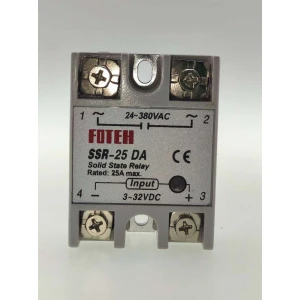
Relè a stato solido Fotek SSR-25 25A per controllo elettrico efficiente
4,88€
Ne restano solo 10 in magazzino
Articoli visualizzati di recente

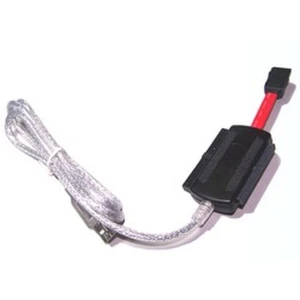
Adattatore USB 2.0 per hard disk IDE e SATA compatibile ed efficiente
8,54€
Ne restano solo 10 in magazzino


 Relè a stato solido Fotek SSR-10 10A per controllo elettrico efficiente
4,88€